
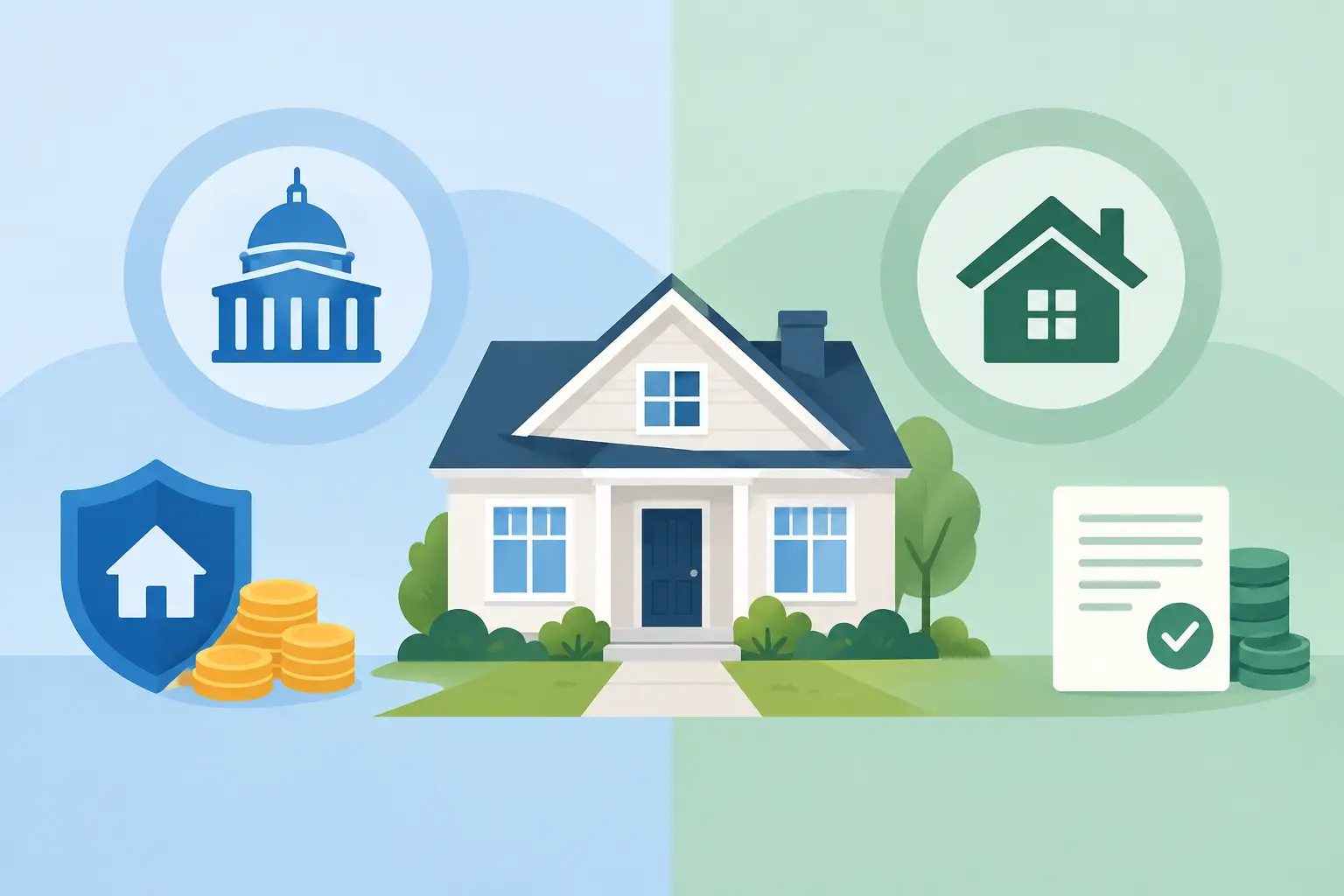
A $350,000 home can look affordable on a mortgage calculator, then feel very different once the down payment, mortgage insurance, credit profile, and seller negotiations enter the picture. That is why comparing FHA versus conventional loans is about more than finding the lowest advertised rate. It is about choosing a financing strategy that fits your budget now and your plans after you get the keys.
For many Cincinnati-area buyers, FHA and conventional financing are both realistic paths to homeownership. Neither is automatically better. The right answer depends on your credit, available cash, debt-to-income ratio, the property, and how long you expect to keep the loan.
FHA versus conventional loans at a glance
An FHA loan is insured by the Federal Housing Administration. That government insurance helps lenders approve borrowers who may have a smaller down payment, a lower credit score, or a higher debt-to-income ratio. FHA loans are designed for owner-occupied primary residences, not vacation homes or investment properties.
A conventional loan is not insured by the FHA. Most conventional mortgages are eligible for purchase by Fannie Mae or Freddie Mac, although lenders also offer other conventional options. Because the lender takes on more of the credit risk, conventional guidelines can be less forgiving in some areas. In return, a strong borrower may receive lower mortgage insurance costs, more property flexibility, or better long-term pricing.
Both programs can help qualified buyers purchase a home. The details determine which one creates the better monthly payment and overall cost.
Down payment: lower is not always cheaper
FHA loans are known for allowing a down payment as low as 3.5% for borrowers who meet the program’s credit requirements. That can make a meaningful difference for a buyer who has stable income but has not had years to build savings.
Conventional loans can also require as little as 3% down for eligible first-time buyers and certain other borrowers. A 5% down payment is common, and putting down 10%, 15%, or 20% can improve pricing and reduce or eliminate private mortgage insurance.
The key question is not simply, “What is the smallest down payment I can make?” It is, “What cash position will leave me comfortable after closing?” Buyers still need to account for closing costs, prepaid taxes and insurance, moving expenses, and an emergency cushion. Draining every available dollar for a larger down payment can create stress after closing, even if it improves the rate or payment on paper.
Seller-paid closing costs may also affect the decision. FHA can be especially helpful when a buyer needs the seller to contribute toward allowable closing costs and prepaid items. Conventional loans allow seller contributions too, but the permitted amount can depend on the down payment, property type, and occupancy.
Credit score and debt-to-income differences
FHA is often more forgiving of past credit challenges. A borrower with a lower score, limited credit history, or a credit event that is sufficiently behind them may have a clearer path through FHA underwriting than through conventional financing. FHA does not mean no credit standards, though. Lenders still review payment history, income, assets, and the full loan file.
Conventional loans tend to reward stronger credit profiles. A buyer with good to excellent credit may qualify with a low down payment while receiving favorable interest-rate and mortgage-insurance pricing. On the other hand, conventional pricing can become noticeably more expensive when credit scores are lower or debt levels are higher.
Debt-to-income ratio matters under both programs. This ratio compares your monthly debt obligations – such as car payments, student loans, credit cards, and the proposed housing payment – with your gross monthly income. FHA may allow more flexibility for a buyer with higher monthly debt, particularly when the overall file shows reliable income and compensating strengths. Conventional approval can still be possible, but the acceptable ratio may be tighter depending on credit, assets, and automated underwriting findings.
A pre-approval should look beyond whether you can technically qualify. A personalized mortgage experience also considers whether the payment supports your lifestyle, savings goals, and the possibility of future expenses.
Mortgage insurance is the long-term dividing line
Mortgage insurance is one of the biggest differences in FHA versus conventional loans.
FHA loans generally include an upfront mortgage insurance premium and an annual mortgage insurance premium paid through the monthly payment. The upfront premium is commonly financed into the loan amount rather than paid in cash at closing. For most FHA borrowers who put less than 10% down, monthly mortgage insurance lasts for the life of the loan. Removing it usually requires refinancing into another loan type once it makes financial sense.
Conventional loans with less than 20% down typically require private mortgage insurance, often called PMI. The cost varies based on credit score, down payment, loan amount, and other risk factors. For a borrower with strong credit, conventional PMI can be considerably less expensive than FHA mortgage insurance.
Conventional PMI also has an exit strategy. In many cases, you can request cancellation when the loan balance reaches 80% of the home’s original value, provided you meet the lender’s requirements. It is generally scheduled to end automatically at 78% of the original value if the loan is current. That potential to remove PMI can make conventional financing particularly attractive for buyers who plan to stay in the home for several years.
FHA may still win when conventional mortgage insurance is high because of lower credit or a limited down payment. This is why comparing only the interest rate can lead to the wrong decision. The total payment and projected cost over time matter more.
Property standards and appraisal considerations
Every mortgage program requires an appraisal, but FHA appraisals have an added property-condition component. The appraiser must confirm the home meets FHA minimum property requirements related to safety, security, and soundness. Peeling paint in an older home, a damaged roof, missing handrails, or certain repair issues can become obstacles that need to be addressed before closing.
That does not mean FHA buyers can only purchase perfect homes. It does mean the purchase contract, repair negotiations, and timeline may need more attention. In a competitive market, a seller may prefer an offer with fewer perceived repair hurdles, even when an FHA buyer is well qualified.
Conventional appraisals also identify significant concerns, but they are often less prescriptive about minor property conditions. Conventional financing is generally a better fit for second homes and investment properties as well, while standard FHA financing is intended for a primary residence.
When an FHA loan may be the better fit
FHA can be a smart choice for a first-time buyer who has dependable income but modest savings, a borrower rebuilding credit, or someone whose debt-to-income ratio is close to the edge of conventional guidelines. It can also work well when the goal is to get into a stable, move-in-ready primary residence without waiting years to reach a 20% down payment.
For example, a buyer with a 620 credit score and 3.5% down may find that FHA offers a more manageable approval path and payment than conventional financing. That does not make FHA a permanent decision. If the buyer’s credit improves and the home’s value rises, refinancing later may offer an opportunity to remove mortgage insurance.
When conventional financing may be the better fit
Conventional financing often deserves a close look when a buyer has stronger credit, can put at least 5% down, or expects to keep the mortgage for a long time. It may offer lower mortgage insurance costs, no FHA upfront insurance premium, and the ability to cancel PMI later.
It can also be the practical choice for a property that may not satisfy FHA condition requirements, a second home, or an investment purchase. A buyer with a 740 score and 10% down, for instance, may find that conventional pricing produces a lower overall cost even if the FHA interest rate appears slightly lower at first glance.
Compare the payment, closing costs, and future plans
The best way to decide is to review both options side by side using the same purchase price and realistic assumptions. Compare the interest rate, principal and interest payment, mortgage insurance, estimated taxes and homeowners insurance, cash needed to close, and the cost over the period you expect to own the home.
Also consider what may change. Are you likely to refinance within a few years? Will you receive a bonus or have a plan to make extra principal payments? Is the home likely to need repairs? Are you trying to preserve savings for a renovation, new furniture, or an emergency fund? Those answers can shift the recommendation.
Trust the experts who focus solely on mortgages to run the numbers from more than one angle. A thoughtful pre-approval is not just a letter that helps you make an offer. It is a plan for buying with clarity, protecting your cash reserves, and moving forward with a payment you can feel good about.