
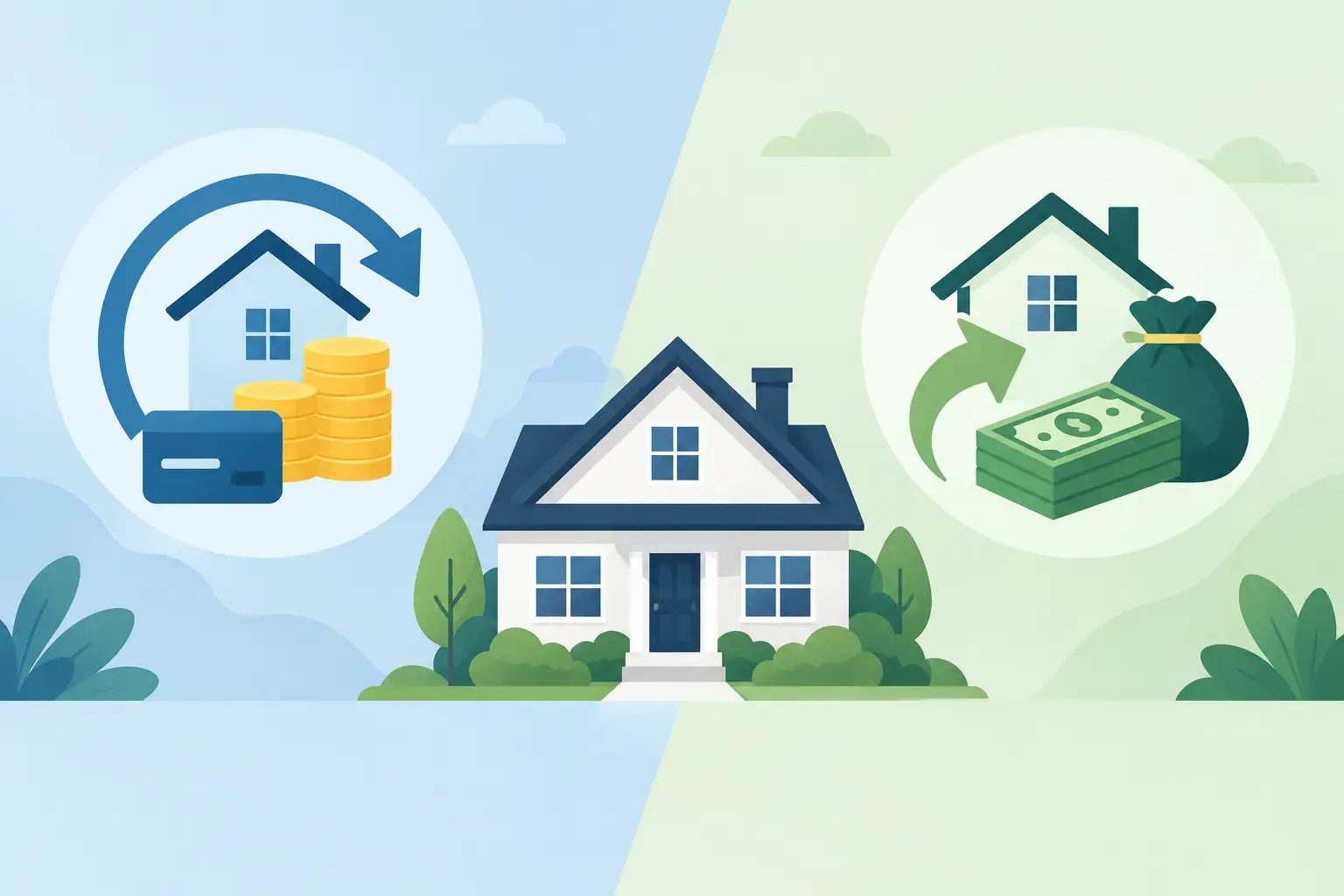
A homeowner with substantial equity may see two very different paths to the same goal: a HELOC versus cash out refinance. Both can turn a portion of your home equity into usable funds, whether you are renovating, consolidating high-interest debt, covering a major expense, or improving cash flow. The better choice usually comes down to one question: should you leave your current first mortgage alone, or replace it?
That decision can affect your monthly payment, interest rate, closing costs, flexibility, and long-term borrowing costs. A clear comparison before you apply can help you use your equity deliberately rather than simply choosing the option with the most attractive advertised rate.
HELOC versus cash out refinance: the basic difference
A home equity line of credit, or HELOC, is usually a second mortgage that sits alongside your existing first mortgage. It gives you access to a credit line up to an approved limit. During its draw period, you can borrow, repay, and borrow again as needed, similar to a credit card but secured by your home. You pay interest only on the amount you have actually drawn.
A cash-out refinance replaces your current mortgage with a new, larger first mortgage. The new loan pays off the existing balance, and you receive the difference in cash at closing. Unlike a HELOC, it is generally one installment loan with a set repayment schedule.
For example, suppose your home is worth $450,000 and you owe $250,000. If a lender permits borrowing up to 80% of the home’s value, your maximum combined mortgage debt may be $360,000. That leaves up to $110,000 in available equity, subject to underwriting, program rules, and closing costs. A HELOC may preserve the $250,000 first mortgage while opening a separate line. A cash-out refinance would replace that first mortgage with a new loan that includes the funds you need.
When a HELOC may make more sense
A HELOC is often worth a close look when your existing first-mortgage rate is significantly lower than current refinance rates. Replacing a low-rate 30-year mortgage just to access a modest amount of cash can increase the interest rate on your entire mortgage balance. Keeping that first loan in place may be more efficient.
It can also fit projects with uncertain costs or staggered timing. A kitchen renovation, for instance, may involve deposits, material purchases, and contractor payments over several months. With a HELOC, you can draw only what you need as expenses arise instead of paying interest on a full lump sum from day one.
The trade-off is that most HELOCs have variable interest rates. Your payment can rise if the underlying index changes. Many HELOCs also have an interest-only draw period followed by a repayment period, when the balance must be repaid over a shorter timeframe. That payment change can be meaningful, especially if you have drawn a large portion of the line.
A HELOC also adds a second monthly payment. While the first-mortgage payment stays the same, your budget needs room for the HELOC payment and potential rate adjustments. It is a flexible tool, but flexibility works best when there is a clear repayment plan.
When a cash-out refinance may be the stronger option
A cash-out refinance can be appealing when you need a larger, one-time amount and want one predictable mortgage payment. If current refinance rates are comparable to or lower than your existing rate, consolidating into a new fixed-rate mortgage may make sense. You replace the old payment with a new one rather than managing two separate loans.
This option may also work well for homeowners who want to use equity to pay off high-interest revolving debt. The interest rate on a mortgage may be lower than credit card rates, although extending repayment over many years can increase total interest if you only make the minimum mortgage payment. The benefit is strongest when debt consolidation is paired with a realistic plan to avoid rebuilding those card balances.
A cash-out refinance gives you the certainty of a fixed rate if you choose a fixed-rate loan. Your payment will include principal and interest from the beginning, which can be easier to plan around than a variable line of credit. Depending on the loan program, you may have the ability to select a new loan term that supports your financial goals.
The main drawback is that you are refinancing the entire existing balance, not just the money you take out. If your current mortgage has a very favorable rate, the new rate applies to every dollar still owed. You will also typically have standard refinance closing costs, which can include lender fees, appraisal costs, title charges, and prepaid items. Some loan structures may reduce upfront costs, but the cost is often reflected elsewhere, such as through a higher rate.
Compare the payment, not just the rate
A low introductory rate or a low monthly payment does not automatically mean lower borrowing costs. With a HELOC, ask how the rate is determined, whether there is an introductory period, how often the rate can adjust, and whether there are annual or lifetime rate caps. Ask what your payment could become if rates rise and when the repayment period begins.
With a cash-out refinance, compare the new payment with your current payment, but also look at the total cost of resetting your loan term. A homeowner who has already paid down a 30-year mortgage for 10 years could lower the monthly payment by starting a new 30-year loan, yet pay interest for longer. That may still be the right move, but it should be intentional.
It also helps to separate the mortgage decision from the use of the cash. Financing a home improvement that adds utility or value may be evaluated differently from financing recurring expenses. There is no universal right answer, but a short-term need should not create a long-term payment that strains your household budget.
Qualification and equity rules matter
Both options depend on your equity, credit profile, income, debts, and the property itself. Lenders look at the combined loan-to-value ratio, often called CLTV, for a HELOC. For a cash-out refinance, they review the new loan-to-value ratio. The maximum available amount varies by loan type, occupancy, property type, credit profile, and lender guidelines.
Cash-out rules can be more restrictive than standard rate-and-term refinancing rules. Investment properties, condos, multi-unit homes, and homes with existing subordinate financing can require additional analysis. If you have a current second mortgage, it may need to be paid off or subordinated as part of a refinance.
Income documentation also matters. Borrowers with traditional W-2 income may have a straightforward path, while self-employed borrowers, commission earners, and real estate investors may need a different approach. A mortgage broker can compare programs and guidelines across multiple wholesale lenders rather than assuming one lender’s standard option is the only available path.
Questions to answer before choosing
Start with the amount you truly need and when you need it. If you need funds in stages and want to protect an excellent first-mortgage rate, a HELOC may be the more practical fit. If you need one lump sum, prefer a fixed payment, or can improve your overall first-mortgage terms, cash-out refinancing may deserve priority.
Then look beyond the initial payment. Consider how long you expect to keep the home, whether you plan to sell or refinance soon, how much rate variability you can comfortably handle, and how the new debt fits your monthly budget. Review the projected payment at higher HELOC rates, the full closing costs of a refinance, and the total interest over your expected time in the loan.
The best equity strategy should feel manageable on an ordinary month, not only when everything goes according to plan. A personalized mortgage review can put the numbers side by side and make the trade-offs easier to see. When you understand what you are preserving, what you are replacing, and what the new payment may become, you can move forward with more confidence.